
Wellness Education • Food Context • Circadian Rhythm
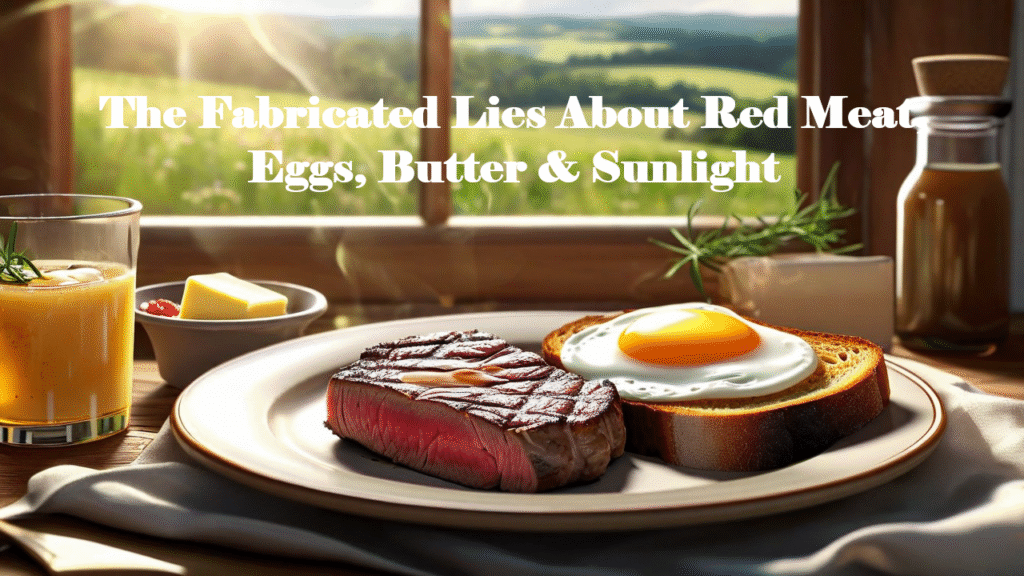
The Great Nutrition Mix-Up: Red Meat, Eggs, Butter, and Sunlight
Have you ever tried to “eat healthy,” only to feel weaker, hungrier, moodier, and more tired—like your body is quietly protesting the plan?
I’ve seen this a lot: someone removes eggs, red meat, and butter because they’ve been told those foods are “bad”… then they end up living on low-fat snacks, sweet drinks, refined carbs, and constant willpower. And the worst part is the shame loop: “Why can’t I stick to a clean diet?”
From a real-world coaching perspective, the issue is often not discipline. It’s biology + context.
This article is a wellness-focused reset: how unprocessed red meat, eggs, butter, and sensible sunlight can fit into a modern, heart-aware lifestyle for many people—especially when the bigger risk drivers (ultra-processed food, excess sugar, late nights, and chronic indoor living) are still running the show.
Start here
Ready for a deeper look?
Book your Bio-Audit™ Wellness Evaluation ($249) to map your patterns and build a practical, non-medical plan.
Book Bio-Audit™ Ask a question
Coaching/education only. Not medical advice.
Summary
When we zoom out to real-life outcomes and zoom in to mechanisms (mitochondrial energy, micronutrients, circadian rhythm), whole foods and daily light exposure often perform better than fear-based rules.
Here’s the big picture we use at Natoorales:
- Unprocessed vs. processed matters (fresh cuts ≠ deli meats and industrial sausages)
- Food quality + cooking method matters (gentle heat ≠ charring)
- Circadian rhythm matters (light, sleep timing, and meal timing change how the body handles food)
- The most consistent “harm signals” show up with ultra-processed foods, excess sugar, and lifestyle disruption
Key Definitions (Simple and Useful)
- Unprocessed red meat: fresh beef/lamb/venison—no curing agents, no industrial additives
- Processed meat: cured/smoked meats with additives (often nitrites/nitrates)
- Mitochondria: the “energy engines” inside cells
- Circadian rhythm: your body’s built-in clock (strongly influenced by light exposure)
- Ultra-processed foods (UPFs): industrial formulations with refined starches, sugars, seed oils, flavors, emulsifiers
The Core Myth: “Animal Foods Are the Main Villain”
For decades, the public story has often sounded like this:
Saturated fat and red meat are the problem. Avoid eggs. Avoid butter. Avoid sun. Take a pill instead.
But modern research and practical experience have complicated that narrative.
What I see most consistently is this:
- People don’t get into trouble because they ate two eggs.
- People get into trouble because they live in a pattern of sleep disruption, sugar spikes, chronic stress, indoor living, and ultra-processed convenience.
So the real question becomes:
“What does your body actually need to feel stable?”
Not what headlines say. Not what a food pyramid says. Your actual biology.
Why Red Meat Can Support Energy (When It’s Unprocessed and Used Wisely)
When we talk about red meat from a wellness lens, I’m not talking about fast-food patties and burnt barbecue. I’m talking about unprocessed, responsibly sourced meat used as a nutrient engine.
Red meat provides building blocks people commonly underestimate, including:
- Heme iron (supports oxygen delivery—often relevant for fatigue patterns)
- B-vitamins (energy metabolism support)
- Zinc + selenium (cellular and immune resilience support)
- Taurine + carnitine (often discussed in the context of energy and performance)
- CoQ10 presence (part of cellular energy pathways)
Practical coaching note
If someone is depleted, under-eating protein, or living on refined carbs, adding a consistent, digestible protein anchor can be a turning point—especially when paired with better sleep timing and daylight.
Why Eggs Are Not “Just Cholesterol”
Eggs are one of the most misunderstood foods.
In practice, eggs can be a simple way to support:
- Protein consistency (stable mornings, fewer cravings)
- Choline (a key nutrient for cell membranes and brain-related nutrition pathways)
- Carotenoids like lutein/zeaxanthin (often discussed for eye and antioxidant support)
Coaching cue
Many people do better when eggs are paired with:
- vegetables
- natural fats
- and a calm meal pace (not rushed, not eaten in a stress state)
That’s not spiritual fluff—digestion is a nervous system event. If you want a structured rhythm for that, start with the Nervous System Reset. It’s foundational.
Why Butter (and the “Food Matrix”) Changes the Conversation
Butter tends to get reduced to one villain label: “saturated fat.”
But real food doesn’t behave like isolated nutrients. Butter and traditional dairy foods come with a food matrix (how nutrients are packaged together). And in many people, modest amounts of butter or ghee can support:
- satiety (less snack chasing)
- stable meal satisfaction (less sugar rebound)
- absorption of fat-soluble nutrients (from vegetables and egg yolks)
If dairy isn’t your friend
Some individuals do better with:
- ghee (less milk solids)
- smaller portions
- or avoiding dairy entirely if it reliably triggers symptoms
We don’t force a food. We use feedback.
Sunlight: The Missing “Nutrient” Modern Life Forgot
Sunlight isn’t only about vitamin D. Light exposure helps regulate:
- circadian rhythm
- sleep depth
- morning cortisol rhythm (energy and focus)
- appetite and cravings
- overall daily “timing intelligence”
In coaching, I often call this the light anchor.
A simple light practice
- Morning outdoor light within 60 minutes of waking (5–15 minutes)
- brief midday exposure when appropriate
- avoid burning and build tolerance gradually
If you’re in a high-stress season or feel stuck in fight-or-flight patterns, this becomes even more important— because your clock and your nervous system talk to each other constantly.
The Synergy: Why These Four Often Work Better Together
- Red meat + eggs can support protein consistency and nutrient density
- Butter/ghee can improve satisfaction and help absorb fat-soluble nutrients
- Sunlight sets your daily rhythm so your body handles food more intelligently
A meal like eggs + greens + a bit of butter, followed by a short outdoor walk, can be more supportive than a “perfect” low-fat meal eaten in a rushed, stressed, indoor state.
If you want this personalized to your history, stress load, digestion, and goals, start with a Bio-Audit™ Wellness Evaluation.
Coaching/education only. Not medical advice.
Practitioner Insight (Ian Kain)
One pattern I’ve seen again and again is this:
Food fear creates physiology that looks like “bad metabolism.”
When someone has spent years afraid of butter, red meat, or egg yolks, they often unintentionally slide into:
- under-eating protein
- over-relying on refined carbs
- chasing caffeine
- skipping breakfast, then crashing later
- grazing at night
- sleeping lighter because blood sugar is unstable
But here’s the part most people miss:
That entire cycle often rides on a nervous system that doesn’t feel safe.
When we add enough protein and natural fats in the morning and introduce a consistent light anchor, the body often shifts out of “resource scarcity mode.” Cravings calm down. People stop negotiating with themselves all day. And digestion often improves because they’re not eating while braced.
This is why our deeper work—especially inside the NeuroSoul Program—doesn’t separate food from somatic patterns. If your system has lived through chronic stress, the body tends to interpret restriction as threat. Supporting bioenergetics without addressing that background tension is like trying to charge a battery while the alarm system is still blaring.
If you resonate with the generational or long-term pattern layer of this, you may also appreciate exploring The Miasms Hub as a lens for inherited stress themes and long-running “family patterns” around food, safety, and scarcity.
The Authority Bridge (PubMed/NIH Links to Build Trust)
To strengthen credibility with Google (and give readers real science entry points), here are two highly relevant topics to link:
- [PLACEHOLDER: Insert PubMed link here regarding unprocessed vs processed meat and cardiometabolic outcomes in cohort studies]
- [PLACEHOLDER: Insert NIH/PubMed link here regarding circadian rhythm, light exposure, and metabolic health markers]
What About Sugar, Ultra-Processed Foods, and Industrial Frying?
If you want to reduce risk signals without living in fear, focus on what consistently stacks the odds against you:
The big three I see in real life
- added sugar (especially drinks and frequent desserts)
- ultra-processed convenience foods (snacks, packaged meals, sweetened “health” bars)
- sleep + light disruption (late nights, inconsistent mornings, indoor living)
About seed oils (balanced stance)
This topic gets emotional fast.
Here’s a grounded coaching position:
- Some studies show certain fatty acids can improve lipid markers
- Repeated high-heat frying of polyunsaturated oils is a practical concern (oxidation byproducts)
- A simple win: avoid deep-fried foods and repeatedly heated oils; prioritize minimally processed fats you tolerate
We don’t need conspiracy to make an upgrade. We need better defaults.
The “23 g/day” Claim: Separating Rumors From Reality
You may have heard claims that governments are going to “limit meat” to tiny daily grams.
Here’s the clean framing:
- Some organizations publish non-binding global diet models that include very low red meat targets
- Those models are not personal legal limits on what you eat
- Policies that do exist tend to focus on agriculture and production rather than policing individual plates
Bottom line: if you want to make smart choices, use your body feedback + quality sourcing + balanced context, not panic headlines.
Practical Buying, Cooking, and Pairing Tips
Red meat
- choose unprocessed cuts
- cook gently (avoid charring)
- pair with colorful plants and herbs (rosemary, thyme, greens)
Eggs
- prioritize quality sourcing when possible
- soft-boil, poach, or gently scramble
- pair with vegetables + fats (better satisfaction, better nutrient use)
Butter/ghee
- use modestly (finishing vegetables, cooking eggs)
- if sensitive, trial ghee
- keep portions appropriate for your goals and digestion
Sunlight
- morning outdoor light daily (5–15 minutes)
- build slowly, avoid burning
- dim lights at night to protect sleep depth
A 4-Week DIY Reset (Coaching-Friendly)
Goal: build a supportive rhythm that includes these foods and sunlight while reducing the most common drivers of instability.
Week 1: Light + timing
- morning outdoor light daily
- 12-hour eating window (example: 8:00–20:00)
- reduce sweet drinks
Week 2: Protein anchors
- add unprocessed red meat 2–4 meals/week (reasonable portion)
- eggs as a regular protein option (if tolerated)
Week 3: Fat satisfaction
- use butter/ghee modestly to improve meal satisfaction
- reduce ultra-processed snacks that “sound healthy” but keep cravings alive
Week 4: Consolidate the rhythm
- consistent sleep timing
- short outdoor walk after meals when possible
- keep ultra-processed foods as occasional, not foundational
If you want this personalized to your history, stress load, digestion, and goals, start with a Bio-Audit™ Wellness Evaluation. And if stress physiology is the main driver of your cravings and crashes, explore Executive Burnout Recovery or our Trauma Release Services.
Closing
We’ve been trained to fear the wrong things.
For many individuals, responsibly sourced unprocessed red meat, eggs, butter, and sensible sunlight can be part of a grounded, heart-aware lifestyle— especially when the real culprits (ultra-processed foods, excess sugar, broken sleep timing, and indoor living) are addressed.
The goal isn’t perfection. It’s stability.
Related Reading (Coherence Library)
- Liver Vitality and Mitochondrial Metabolism
- Smash the Fatty Liver Myth: Mitochondrial Energy Support
- Remote Trauma Support for Burnout Relief
Work with Natoorales
If you want this personalized (without hype)
- Private 1:1 coaching + education (non-medical)
- Bio-Audit™ = clarity engine (systems map + sequencing roadmap)
- Integrated pathways: nervous system regulation, trauma-release coaching, systemic work, movement
Start with Bio-Audit™ Explore the next best service
Scope note: Coaching + education only. Not medical advice, diagnosis, or treatment.
SEO DATA SET
- New Title: Red Meat, Eggs, Butter, Sunlight Reset | Natoorales
- New Slug: red-meat-eggs-butter-sunlight-nutrition-reset
- Meta Description: A coaching-based reset on red meat, eggs, butter, and sunlight—supporting steady energy, better rhythms, and smarter nutrition context.
- Primary Keyword: red meat eggs butter sunlight support