

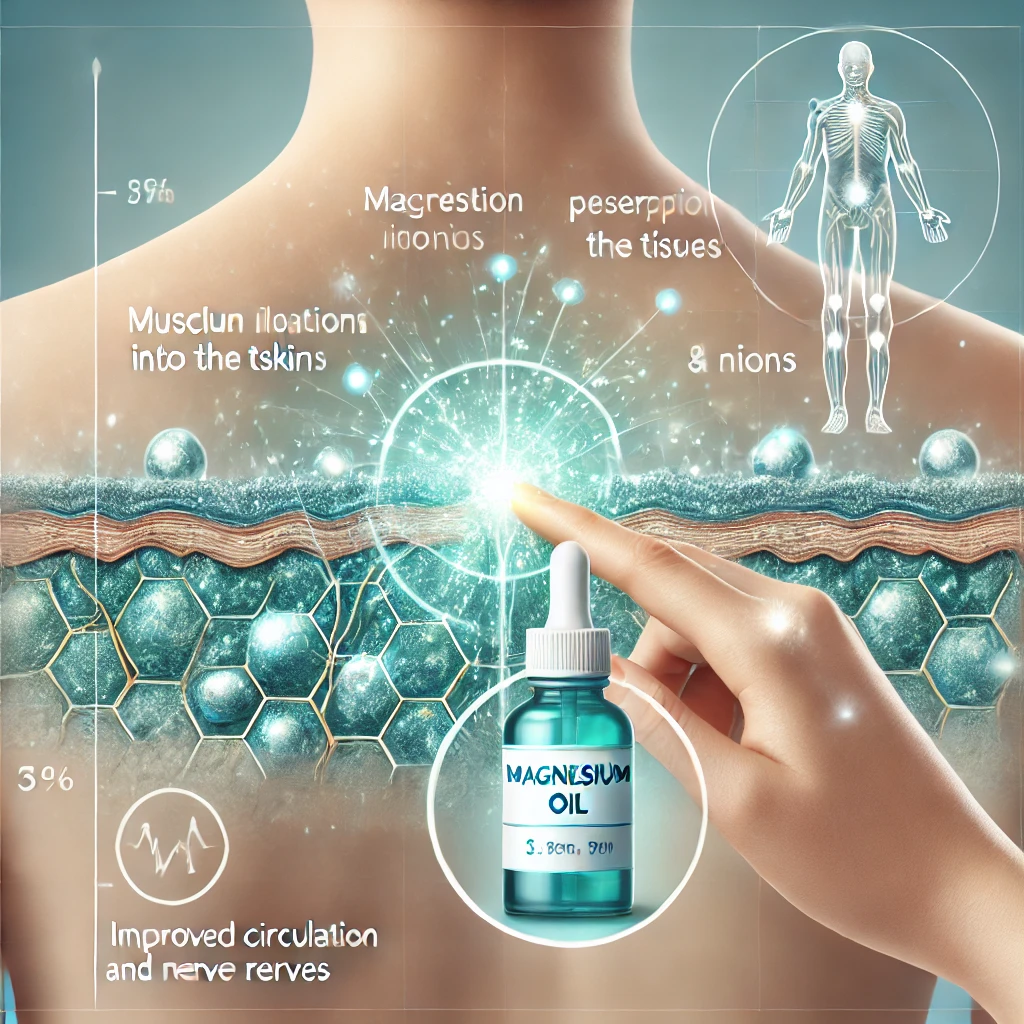
Supporting Body and Mind With Magnesium Oil
Have you ever had one of those days where your body feels tight, your mind feels loud, and your sleep feels like it’s been replaced by “thinking in the dark”?
That’s one of the most common moments people start looking for a simple mineral ritual—something that feels grounding, not extreme.
Magnesium is a foundational mineral involved in muscle and nerve function, energy processes, and everyday stress tolerance. (Office of Dietary Supplements) And while food comes first, many people like magnesium “oil” (usually magnesium chloride in water) as a topical option—especially when they don’t tolerate oral supplements well.
If you’re new here, start at Home.
Summary
Magnesium oil is a topical magnesium chloride solution people use to support:
- muscle release after long days
- bedtime downshifting
- “wired-but-tired” body tension
- recovery rhythm during stressful weeks
Reality check: the research on transdermal magnesium absorption is still mixed and not fully settled—so I treat magnesium oil as a supportive ritual, not a guaranteed shortcut. (PMC)
Coaching Disclaimer
This article is for education and coaching-style wellness support. It’s not medical advice, diagnosis, or a substitute for licensed care. If you have significant symptoms, a known condition, are pregnant, or take medications, coordinate supplement decisions with a licensed clinician. Magnesium can interact with certain medications. (Office of Dietary Supplements)
What Magnesium “Oil” Really Is
Despite the name, magnesium oil usually isn’t an oil at all. It’s typically:
- magnesium chloride dissolved in water (a concentrated brine)
- sometimes blended with botanical scents (optional)
It can feel slick on the skin—hence the “oil” nickname.
NIH’s Office of Dietary Supplements notes magnesium supports many processes including muscle and nerve function and blood pressure regulation. (Office of Dietary Supplements)
Why People Choose a Topical Option
In real life, people usually reach for magnesium oil for one of three reasons:
- They want a simple nighttime ritual (neck, shoulders, feet)
- Oral magnesium upsets their digestion (too loose, too fast) (Office of Dietary Supplements)
- They prefer “low-lift consistency” over another daily capsule routine
Important nuance: a major review discussing transdermal magnesium points out the evidence base is limited and inconsistent—so it’s best to keep expectations grounded. (PMC)
What Magnesium Oil Can Feel Like (So You Don’t Panic)
A few normal sensations:
- tingling or mild stinging, especially at first
- warmth in tight areas
- a salty residue as it dries
If it burns or irritates, your skin is giving you feedback—dilute it, reduce frequency, or rinse sooner.
How We Use Magnesium Oil in a Nervous-System-First Way
If you want this to actually stick, keep it simple.
Option A: The evening downshift (my favorite)
- Spray or rub a small amount on feet or calves
- Or apply to shoulders/neck
- Leave 10–20 minutes, then rinse if your skin prefers it
Pair it with our Nervous System Reset if sleep is wired, shallow, or inconsistent.
Option B: Post-workout or “long day” support
- Apply to calves, quads, or forearms
- Light massage
- Hydrate afterward
Option C: Bath support (gentle + classic)
- Warm bath with magnesium salts if you enjoy it
- Keep it calming, not punishing
If your system is running on constant output and crashes, you’ll likely get more mileage by combining mineral support with pacing inside Executive Burnout Recovery.
Should You Add Essential Oils?
Sometimes a scent can help the nervous system associate the ritual with downshifting. But essential oils are potent and can irritate skin if used carelessly.
A safety note: some citrus oils can be phototoxic on skin exposed to sunlight—so nighttime is generally safer, and dilution matters. (Tisserand Institute)
Simple rule: if you use essential oils, keep it low, patch test, and don’t use “hot” oils undiluted.
A Clear Warning About DMSO
You’ll see DMSO mentioned online as a “penetration enhancer.” It can increase skin transport of substances. (PMC)
That’s exactly why I’m cautious:
- If it can carry “the good stuff,” it can also carry contaminants or whatever is on your skin.
- It raises the stakes for purity, handling, and supervision.
In the Natoorales ecosystem, I treat DMSO as an advanced tool that belongs in a carefully guided context—not a casual DIY add-on.
If you want a safer way to personalize your approach, start with the Bio-Audit™ Wellness Evaluation and we’ll sequence things intelligently.
Who Should Be Extra Careful
Use extra caution (and coordinate with licensed care) if you:
- have kidney concerns (magnesium handling matters) (Office of Dietary Supplements)
- take medications that may interact (NIH lists examples including certain antibiotics, diuretics, and others) (Office of Dietary Supplements)
- have very reactive skin, eczema-like flares, or open areas (avoid broken skin)
Also remember: NIH notes that high intakes of magnesium from supplements/medications can cause GI side effects, and it provides upper-limit guidance for supplemental magnesium. (Office of Dietary Supplements) (Topical products aren’t the same category—but if you’re stacking multiple sources, it’s smart to track total load.)
Practitioner Insight: Why Magnesium Rituals Work Better When You Stop Bracing
Here’s the pattern I see again and again:
When someone is living in subtle fight-or-flight, they’re often bracing in the jaw, diaphragm, and pelvic floor without realizing it. That bracing changes breathing depth, sleep quality, and stress chemistry.
And that matters for bioenergetics.
In a braced state, the body tends to run on “emergency power”—short bursts of output, then a crash. That’s a mitochondrial lifestyle: protection first, repair later.
When magnesium oil is used as a ritual—slow breath, warm light, feet on the floor, shoulders dropping—people often report the real win isn’t “more energy.”
It’s steadier energy.
That’s the shift I’m looking for: less stimulation to function, more calm output you can trust. If this is a core theme for you, that’s exactly what we work with inside NeuroSoul Intensive and Trauma Release Services.
The Authority Bridge
Two research directions that pair well with this article:
Ian Kain, Wellness Thrive Designer, ian@natoorales.com, https://natoorales.com,
End of the article.
REFERENCES
- NIH Office of Dietary Supplements — Magnesium Fact Sheet (Consumer) (Office of Dietary Supplements)
- Gröber et al. (2017) — “Myth or Reality—Transdermal Magnesium?” (review, PMC/NIH) (PMC)
- Nightingale et al. (2024) — Topical magnesium chloride spray study (ScienceDirect) (ScienceDirect)
- Capriotti & Capriotti (2012) — DMSO history/chemistry/clinical utility (PMC/NIH) (PMC)
- Tisserand Institute — Phototoxicity and essential oil topical safety (Tisserand Institute)
- University of Maryland CES — DMSO as penetration enhancer + contaminant risk (support.al.umces.edu)