
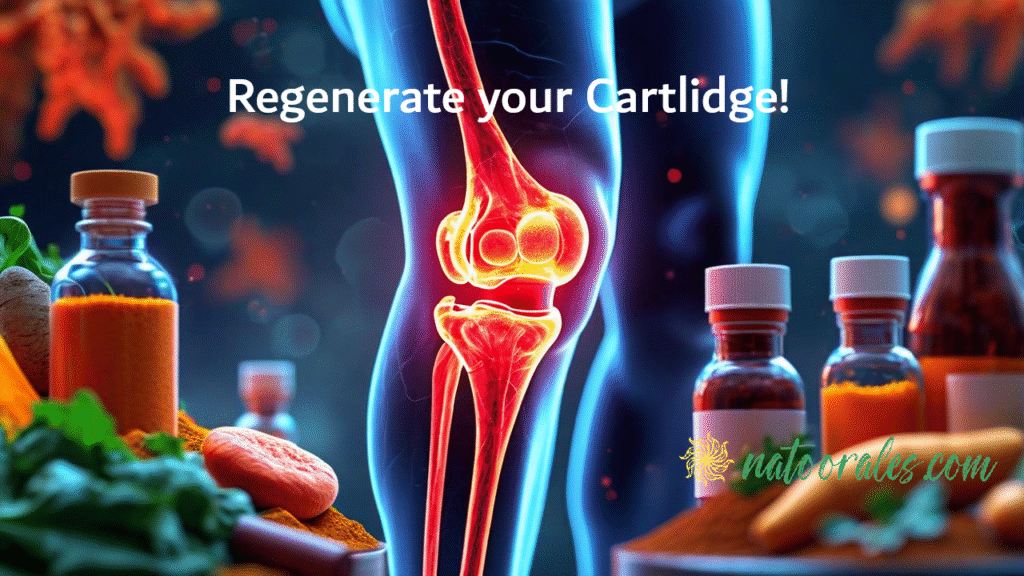
Summary
Cartilage damage often leads to chronic joint pain, stiffness, and limited mobility. Conventional medicine typically manages symptoms with painkillers, steroid injections, or surgery. But a growing body of research and traditional medical systems show a different path: cartilage can partially regenerate when you support your body’s innate repair mechanisms.
This guide walks you through evidence-based, natural strategies to help restore joint function and reduce pain—starting with food and lifestyle and reaching deep into cellular regeneration via mitochondrial health and mineral balance.
You’ll learn how to:
- Reduce inflammation with targeted nutrition
- Support collagen synthesis with key supplements
- Stimulate repair with natural therapies
- Improve energy production in joint cells (chondrocytes)
- Balance minerals to activate enzyme systems
- Build a DIY joint-repair routine at home
Improvements often start in 3–6 months with consistent action. This is not a miracle cure. It’s a biological reconditioning process, and your body is capable of it.
Introduction to the Topic (Background)
Cartilage is the smooth, cushioning tissue that lines the ends of bones in your joints. It acts like a shock absorber. Because it lacks its own blood supply, cartilage heals slowly.
Historically, once cartilage was damaged, doctors believed it was gone for good. But this belief is outdated. Emerging studies and centuries of natural medical traditions (like Ayurveda and Traditional Chinese Medicine) point to the potential for repair—provided the body gets what it needs.
Conditions like osteoarthritis, degenerative disc disease, or general joint pain can respond to:
- Anti-inflammatory foods
- Corrective movement
- Natural therapies (like red light and ozone)
- Mitochondrial and mineral support
Today, we combine ancestral wisdom with modern science to help your joints repair from the inside out.
Definitions of Key Terms
Cartilage: Flexible connective tissue that protects joints and allows smooth motion.
Chondrocytes: Specialized cells that maintain cartilage tissue.
Collagen: A protein that forms the structural matrix of cartilage, bones, and skin.
Synovial fluid: The lubricating fluid that delivers nutrients to cartilage.
Osteoarthritis (OA): Degenerative joint condition marked by cartilage loss and inflammation.
Red light therapy (LLLT): A therapy using red and near-infrared light to improve cellular function.
Mitochondria: The energy-producing structures in cells; they power tissue repair.
Minerals: Essential nutrients (like magnesium and zinc) that activate collagen-building enzymes.
4. Eat to Heal: Nutritional Strategies for Cartilage Repair
Your joints are built from what you eat. The goal is to reduce inflammation, provide collagen-building materials, and support the gut (where nutrient absorption starts).
Anti-Inflammatory Foods
These foods lower chronic inflammation, which degrades cartilage:
- Fatty fish (salmon, sardines)
- Turmeric and ginger
- Leafy greens (spinach, kale)
- Berries and olive oil
Foods That Build Cartilage
These provide the raw materials for joint repair:
- Bone broth, gelatin, collagen powder
- Citrus fruits and bell peppers (vitamin C)
- Grass-fed meats, eggs (zinc, sulfur, vitamin B6)
- Pumpkin and sesame seeds (magnesium, manganese)
Foods to Avoid
These foods trigger inflammation and hinder repair:
- Refined sugars
- Seed oils (canola, soybean)
- Alcohol in excess
- Low-vegetable, high-protein diets
Combine collagen-rich foods with vitamin C for better absorption.
5. Supplements That Help Rebuild Cartilage
Supplements fill in nutritional gaps and speed up the regeneration process.
| Supplement | Function | Dosage |
|---|---|---|
| Collagen peptides (Type II) | Stimulates chondrocyte activity | 5–10 g |
| Glucosamine sulfate | Builds joint cushioning | 1,500 mg |
| Chondroitin sulfate | Improves cartilage hydration | 800–1,200 mg |
| MSM (methylsulfonylmethane) | Supplies sulfur for connective tissue | 1–3 g |
| Hyaluronic acid | Lubricates joints | 100–200 mg |
| Omega-3s (EPA/DHA) | Reduces inflammation | 1–2 g |
| Vitamin C | Required for collagen synthesis | 500–1,000 mg |
| Vitamin D3 + K2 | Supports calcium metabolism | 2,000–4,000 IU / 100 mcg |
| Boswellia extract | Anti-inflammatory herb | 300–600 mg |
These work best in combination. Take collagen with vitamin C in the morning, and include MSM and omega-3s daily.
6. Mitochondrial and Mineral Medicine: The Cellular Key to Repair
Mitochondria: Your Joint’s Power Plant
Chondrocytes need energy to build collagen, manage inflammation, and repair tissue. That energy comes from mitochondria.
Poor mitochondrial function = poor healing.
Support Mitochondria With:
- CoQ10 (100–200 mg): Supports ATP production
- PQQ (10–20 mg): Triggers new mitochondria
- Alpha-lipoic acid (300–600 mg): Regenerates antioxidants
- L-carnitine (1–2 g): Fuels fatty acid transport into mitochondria
- NAD+ precursors (NMN or NR, 250–500 mg): Boost mitochondrial repair
- Red light therapy: Directly stimulates mitochondria in joint cells
Even breathwork and intermittent fasting support mitochondrial health by improving oxygen use and autophagy.
Minerals: The Enzymes’ Ignition Key
Most joint repair enzymes need minerals to activate. Deficiency halts healing.
Essential Minerals for Joint Health
| Mineral | Function | Sources |
|---|---|---|
| Magnesium | Needed for over 300 reactions, including vitamin D activation | Pumpkin seeds, leafy greens |
| Zinc | Activates collagen enzymes | Oysters, red meat |
| Boron | Regulates calcium-magnesium balance | Prunes, avocados |
| Silica | Strengthens connective tissue | Horsetail, bamboo extract |
| Copper | Supports collagen cross-linking | Shellfish, sunflower seeds |
Avoid over-supplementing calcium unless balanced with magnesium, K2, and boron.
7. Natural Therapies That Stimulate Cartilage Regeneration
Beyond nutrients, therapies that improve blood flow, oxygenation, and cellular signaling help activate healing.
Red Light Therapy
660nm and 850nm light stimulate mitochondrial repair. Use 10–20 cm from joints for 10 minutes daily.
Ozone Therapy
Boosts oxygen in joint tissues, reduces inflammation, and stimulates regeneration.
Acupuncture
Improves microcirculation and relieves pain. Especially effective for knees and lower back.
Prolotherapy and PRP
Trigger controlled inflammation to jumpstart connective tissue repair. Best done by trained practitioners.
Hydrotherapy (Hot/Cold Contrast)
Improves nutrient delivery and waste removal in joints. Try contrast showers or baths.
Homeopathy
Remedies like Rhus tox, Calc fluor, and Silicea support tissue elasticity and inflammation control.
8. Movement and Lifestyle Habits to Support Repair
Cartilage depends on movement. Joints receive nutrients through motion, not blood flow.
Gentle Exercises to Support Joints
- Swimming or cycling: Non-impact cardio
- Yoga, tai chi, or Pilates: Improves joint fluidity and posture
- Strength training: Build supporting muscles
- Foam rolling or gua sha: Stimulates circulation
Move your joints through full range daily. Even 10 minutes matters.
Sample Routine
- Morning: 10 minutes joint mobility
- Midday: Brisk walk
- Evening: Gentle yoga or stretching
- Twice Weekly: Resistance training
Conclusion
Your body can rebuild damaged cartilage—when you give it the right tools.
Instead of masking symptoms with drugs, support your joints with nutrient-rich food, movement, targeted supplements, natural therapies, and cellular medicine.
It takes time, but consistency brings real results. Start simple: Add collagen, cut sugar, move daily, and shine a red light on your knee.
In a few months, you may notice less stiffness, less pain, and more freedom to move.
Appendix: Self-Help Protocol and DIY Tips
Daily Checklist
☐ Drink 2 liters of mineral-rich water
☐ Collagen + vitamin C
☐ Magnesium + zinc supplement
☐ Omega-3 + MSM
☐ 10 minutes red light therapy
☐ Anti-inflammatory meals (2 per day)
☐ 10-minute joint mobility
☐ Mindful breathing (5–10 min)
Weekly Actions
- Strength training or yoga (2 sessions)
- Gua sha or foam rolling
- Contrast bath or sauna session
- Posture check at work/home
Shopping List Essentials
- Collagen peptides
- MSM + Glucosamine/Chondroitin complex
- Vitamin C + D3 + K2
- CoQ10 + PQQ
- Omega-3s (fish oil or algae-based)
- Bone broth or gelatin
- Red light therapy panel (660/850nm)
Call to Action
Ready to heal your joints from the inside out?
Book your Complete Wellness Evaluation today at www.natoorales.com and get a personalized regeneration plan backed by science and natural wisdom.
Disclaimer
This article is for informational purposes only and is not a substitute for professional medical advice, diagnosis, or treatment. Always seek the advice of your physician or other qualified health provider with any questions you may have regarding a medical condition.
References
- Henrotin, Y., et al. (2019). Nutraceuticals in osteoarthritis. BMC Complement Med Ther, 19(1), 1–10.
- Nicolson, G. L. (2014). Mitochondrial dysfunction and chronic disease. Alt Ther Health Med, 20(1), 18–25.
- Wallace, D. C. (2005). Mitochondrial paradigm in disease. Am J Hum Genet.
- DiNicolantonio, J. J. et al. (2018). Magnesium and joint health. Open Heart.
- Zeng, C., et al. (2015). Omega-3 and joint function. Arthritis Res Ther, 17(1), 275.
- Simental-Mendía, M., et al. (2018). Vitamin D & K in cartilage. Clin Rheumatol, 37(3), 737–744.
- Leal Junior, E. C., et al. (2010). Red light for osteoarthritis. Photomed Laser Surg, 28(2), 223–229.
Written by Ian Kain, Wellness Thrive Designer | www.natoorales.com | wellness@natoorales.com