
INTRO
Imagine waking up to stabbing abdominal pain, rushing to the bathroom with urgency, only to find blood in your stool—again. You cancel your plans, push back work, and stare at the ceiling wondering when this cycle will end. For over 3 million people dealing with ulcerative colitis (UC) or Crohn’s disease, this is a familiar nightmare.
I remember working with Sarah, a 39-year-old graphic designer who had tried every steroid, immunosuppressant, and low-residue diet imaginable. Nothing lasted. Her flares came back fiercer. It wasn’t until we addressed her microbiome, ran advanced mineral tests, cleared a hidden jawbone infection, and introduced nervous system regulation, that her healing began to stick.
Here’s the truth: while conventional medicine often focuses on symptom suppression, natural medicine targets the root. From gut microbiome collapse to hidden oral infections, your body is trying to alert you—not betray you.
SUMMARY
This article explores the deeper causes behind ulcerative colitis and Crohn’s disease and outlines proven natural treatment options. We’ll examine how microbiome damage, chronic infections (including in the mouth), mineral imbalances, emotional trauma, and mitochondrial dysfunction contribute to chronic gut inflammation. Rooted in both scientific research and traditional systems like Ayurveda and Traditional Chinese Medicine, the article blends lifestyle, nutrition, and gentle therapies to offer lasting improvements—not just band-aids.
INTRODUCTION TO THE TOPIC (BACKGROUND)
UC and Crohn’s are forms of inflammatory bowel disease (IBD). UC targets the large intestine lining, while Crohn’s can affect any part of the digestive tract. Despite decades of research, conventional medicine struggles to cure these conditions. Most treatments suppress the immune system rather than fix what’s misfiring.
Historically, descriptions of gut inflammation appear in Ayurvedic texts as Pitta imbalances—associated with excess heat, acidity, and poor digestion. TCM views these conditions as deficiencies in spleen Qi with resulting damp heat in the intestines. Both systems promote the idea that digestive fire, when compromised, triggers disease.
Modern science points to the gut microbiome, environmental toxins, diet, stress, and even oral infections as contributors to gut dysregulation. Rates of IBD are highest in industrialized countries, where processed foods, antibiotics, chronic stress, and dental procedures like root canals are common.
DEFINITIONS OF KEY TERMS
- Ulcerative Colitis (UC): Chronic inflammation of the colon lining, typically beginning in the rectum and progressing upward.
- Crohn’s Disease: Inflammation that can affect any part of the gastrointestinal tract, often deeper and with more complications.
- Gut Microbiome: The collection of bacteria, fungi, and other microorganisms in the digestive tract. A balanced biome supports digestion and immunity.
- Fecal Microbiota Transplant (FMT): A treatment that introduces stool from a healthy donor to rebalance gut flora.
- Cavitations: Areas of jawbone decay often found at old extraction sites, particularly wisdom teeth.
- Root Canal: A dental procedure that removes nerve tissue from an infected tooth; can become a reservoir for bacteria.
- Leaky Gut: Increased intestinal permeability that allows toxins and microbes to enter the bloodstream.
- Mitochondria: The energy-producing components of cells. Dysfunction here increases oxidative stress and inflammation.
- Trauma Release: Mind-body techniques that help the nervous system process and discharge stored emotional tension.
1. MICROBIOME DAMAGE AND BIOME REGENERATION
The gut microbiome is central to both digestion and immune regulation. In UC and Crohn’s, diversity is low and harmful species like E. coli and Candida albicans often dominate. This imbalance—called dysbiosis—triggers inflammation and weakens the gut barrier.
FMT has shown remission rates up to 36% in UC. Probiotics and prebiotics can help, but FMT offers a complete microbial reset. Diets high in fermented foods like kefir and kimchi also restore diversity.
Biome Regeneration Protocols Include:
- 2–3 fermented foods daily
- Prebiotic fiber (onions, garlic, asparagus)
- Weekly high-dose probiotics (20–50 billion CFUs)
- Bone broth and collagen for mucosal healing
Ayurveda supports gut repair through “Basti” (herbal enemas), while TCM uses heat-clearing herbs to reduce inflammation and support digestion.
2. PARASITES, CANDIDA, AND MOLD CLEANSING
Fungal and parasitic overgrowths are more common than most think—especially in people with IBD. Candida creates biofilms and releases acetaldehyde, both of which damage the gut lining.
Cleansing Options:
- Candida: Remove sugars and alcohol, use caprylic acid or oregano oil
- Parasites: Black walnut, wormwood, clove
- Mold/Mycotoxins: Use binders like activated charcoal, and test home air quality
Even helminth therapy (controlled exposure to whipworms) has shown remission benefits for some Crohn’s patients, proving that not all parasites are bad—some modulate immune function.
3. ORAL INFECTIONS: ROOT CANALS AND CAVITATIONS
Here’s a lesser-known trigger: your mouth.
Root canals can trap anaerobic bacteria, which produce endotoxins (like LPS) that leak into circulation. These toxins activate the immune system, promoting systemic inflammation and worsening gut issues.
Cavitations—areas of bone death in the jaw—often form at old extraction sites, especially wisdom teeth. Standard X-rays miss them, but cone-beam CT scans reveal the hidden decay.
Signs to investigate oral infection:
- History of root canals or wisdom tooth extractions
- Chronic fatigue, brain fog, or facial tightness
- Gut symptoms that resist treatment
Solutions:
- Find a biological dentist (IAOMT-certified)
- Get a 3D cone-beam CT scan
- Use ozone therapy or surgical debridement if needed
4. TRAUMA, STRESS, AND VAGUS NERVE DYSFUNCTION
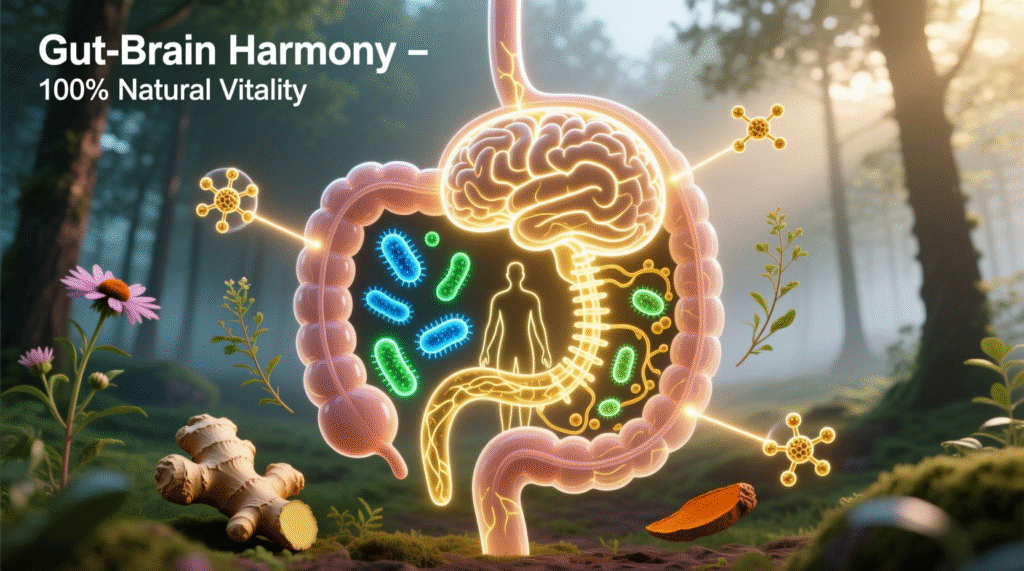
The gut-brain axis isn’t a metaphor—it’s a medical reality. Trauma, chronic stress, or unresolved emotional wounds can cause vagus nerve dysfunction, reducing motility, digestion, and immune control.
Mind-body Therapies That Help:
- TRE (Tension Release Exercises)
- Somatic Experiencing
- Breathwork and Yoga Nidra
- Journaling and emotional reframing
One client halved her flare frequency just by learning how to regulate her nervous system. TCM prescribes Qigong, while Ayurveda uses meditation to pacify excess Pitta.
5. MINERAL IMBALANCES AND MITOCHONDRIAL DAMAGE
UC and Crohn’s aren’t just gut problems—they’re cellular problems. Mitochondria in gut cells break down, releasing inflammatory byproducts.
Essential Nutrients:
- Vitamin D: Reduces immune overactivity; deficiency linked to severe IBD
- Magnesium: Needed for over 300 enzymatic reactions
- Zinc: Crucial for tissue repair and immune balance
- B-vitamins: Support NAD+ production and mitochondrial function
Mitochondrial Support Nutrients:
- CoQ10
- Alpha-lipoic acid
- PQQ
- Urolithin A
Intermittent fasting also activates mitophagy—your body’s way of clearing out damaged mitochondria.
6. DIFFERENTIATING UC AND CROHN’S NATURALLY
While both are inflammatory, they differ in location and depth of tissue damage.
| Feature | Ulcerative Colitis | Crohn’s Disease |
|---|---|---|
| Location | Colon only | Any GI tract part |
| Tissue | Surface lining | Full thickness |
| Flares | Continuous | Patchy |
| Natural Tip | Herbal enemas | Elemental diet |
Crohn’s often needs deeper tissue healing and may benefit from elemental diets, boswellia, or hyperbaric oxygen therapy for fistulas. UC responds better to butyrate enemas, L-glutamine, and probiotics.
CONCLUSION
Your gut issues are not random. They’re a message. Whether it’s a toxic mouth, trauma you haven’t processed, or a biome that’s broken, there is always a cause—and more importantly, a path forward.
Medications have their place. But regeneration—true healing—happens when you nourish your microbiome, regulate your nervous system, detox hidden infections, and support your cells.
APPENDIX: SELF-HELP PROTOCOL AND DIY TIPS
Phase 1: Stabilize
- Eliminate sugars and dairy
- Start high-potency probiotics
- Begin magnesium and vitamin D supplements
- Gentle breathing twice daily
Phase 2: Rebuild
- Bone broth, collagen, fermented foods
- TRE practice 10 minutes daily
- Identify and clear oral infections
Phase 3: Regenerate
- Add mitochondrial nutrients (CoQ10, B-complex)
- Intermittent fasting 14:10 window
- Guided journaling to reframe illness
Oral Detox Tip: Swish ozonated oil for 5 minutes each morning. Scrape your tongue and rinse with saline water.
CTA: Want help mapping your personal root causes? Book a consultation at www.natoorales.com.
Disclaimer: This article is for informational purposes only and is not a substitute for professional medical advice, diagnosis, or treatment. Always seek the advice of your physician or other qualified health provider with any questions you may have regarding a medical condition.
References (APA Style):
- Paramsothy, S., et al. (2017). Multidonor intensive faecal microbiota transplantation for active ulcerative colitis. The Lancet, 389(10075), 1218–1228.
- Moayyedi, P., et al. (2015). Fecal microbiota transplantation in patients with active UC. Gastroenterology, 149(1), 102–109.
- Leonardi, I., et al. (2020). Fungal dysbiosis in Crohn’s disease. Journal of Crohn’s and Colitis, 14(3), 296–305.
- Yadav, S. K., et al. (2019). Mindfulness-based stress reduction in UC patients. Digestive Diseases and Sciences, 64(5), 1250–1258.
- Levy, T. (2017). Hidden Epidemic: Silent Oral Infections Cause Most Heart Attacks and Breast Cancers. MedFox Publishing.
- IAOMT (2023). Biological dentistry and cavitations. https://iaomt.org
- Jedlicka, P., et al. (2020). Mitochondrial dysfunction and UC. npj Biofilms and Microbiomes, 6(1).
- Triantafillidis, J. K., et al. (2015). Use of plant products in IBD. Annals of Gastroenterology, 28(4), 423–430.
Written by Ian Kain, Wellness Thrive Designer | www.natoorales.com | wellness@natoorales.com