
Supporting Mitochondria by Reducing Deuterium Load: A 90-Day Reset
Have you ever done “all the right things”—sleep, supplements, clean meals—yet your energy still feels oddly heavy? Like your system runs… but it doesn’t purr?
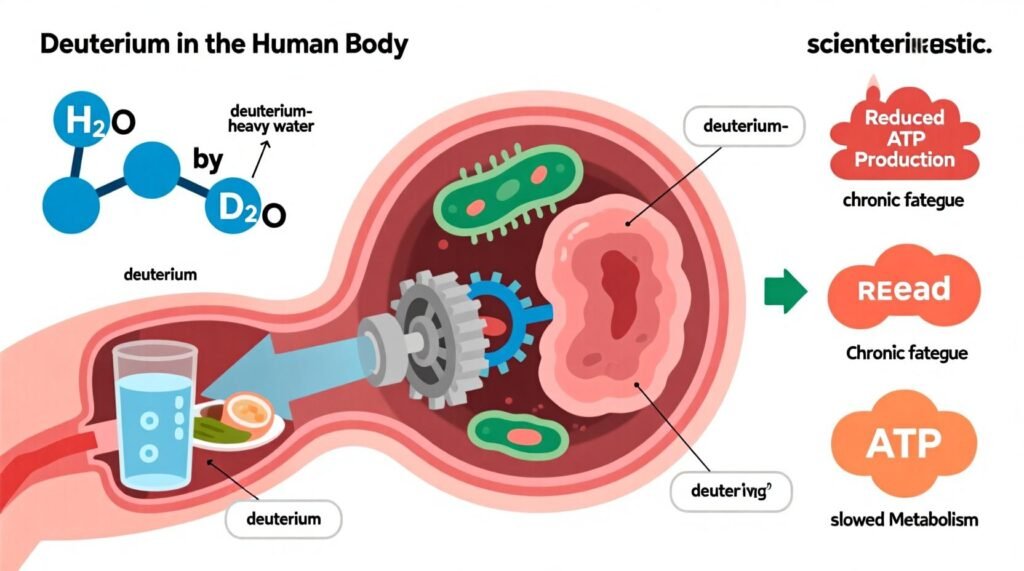
One lens I’ve found surprisingly useful is deuterium—a naturally occurring “heavier” form of hydrogen that shows up in water and food. You don’t need to fear it (your body has always lived with it). But if your metabolic terrain is already stressed, too much deuterium can feel like extra drag on your cellular engines—especially in the mitochondria.
This guide is a coaching + education approach (not medical). I’ll show you what deuterium is, why people in the bioenergetics world care about it, and how to reduce your overall load in a practical, low-drama way over the next 90 days.
Coaching disclaimer: This article is for educational purposes only and is not medical advice. We don’t diagnose or provide licensed care. If you’re dealing with severe symptoms, sudden decline, or complex medical conditions, involve a licensed clinician.
Summary
Deuterium is a natural “heavy hydrogen” found in water and food. In bioenergetics conversations, it matters because mitochondria rely on ultra-light hydrogen flow to generate ATP (your usable energy). For some individuals—especially under chronic stress, circadian disruption, or metabolic slowdown—reducing deuterium load can feel like removing friction from the system.
In this article, you’ll learn:
- What deuterium is (without the fear-mongering)
- Where higher deuterium exposure tends to come from
- A practical 90-day reset using hydration, food pattern shifts, and metabolic levers
- How to track progress without obsessing
- My practitioner insight on why nervous system state determines results
What deuterium is (and why “heavy hydrogen” matters)
Deuterium is an isotope of hydrogen. Same basic element—just heavier.
Here’s the simple point:
- Mitochondria produce ATP using tightly controlled hydrogen flow.
- Heavier hydrogen behaves differently at the microscopic level.
- In deuterium-focused bioenergetics, the idea is that excess deuterium can reduce efficiency—like adding tiny weights to a high-speed turbine.
I don’t present this as a scary villain. I present it as a potential optimization lever—especially for people who feel like their energy output is stuck below what their lifestyle “should” produce.
How higher deuterium load can show up day-to-day
This isn’t a diagnostic list. It’s a pattern list I’ve heard repeatedly from clients who explore this path:
- Energy feels flat even with rest
- You can’t “coffee your way out” of the slump
- More brain fog on higher-carb days
- Slower recovery after training or busy weeks
- Sleep feels “light” or unrefreshing
- Mood feels less resilient under pressure
If this sounds familiar, don’t jump to extremes. Start with the basics: rhythm, hydration, and food pattern cleanup. (That’s how we do it in a nervous-system-safe way at Natoorales.)
Ready for a structured next step?
If you want guidance (non-medical coaching + education) and a clear plan you can actually follow, start here:
Where deuterium tends to hide in modern life
Deuterium exposure varies by geography, water source, and the foods you rely on most.
Often higher exposure patterns
- Heavy reliance on sweet drinks (juice, soda, sweetened coffee drinks)
- Lots of grain-based or starch-heavy meals (especially ultra-processed versions)
- Frequent beer / sugary alcohol
- Out-of-season produce shipped long distances (not “bad,” just a higher likelihood of mismatched metabolism + circadian stress)
Often lower exposure patterns (in practice)
- More animal proteins and traditional fats
- More temperate vegetables
- More seasonal eating
- Fewer liquid sugars
This is not a moral diet. It’s an energy strategy.
The 3 levers that matter most
If you do only three things, do these:
1) Hydration pattern (steady > intense)
Instead of chasing “perfect water,” aim for a consistent hydration rhythm and reduce sweet beverages. If you choose to explore low-deuterium water, treat it like a partial swap, not a religion.
Start here:
- Replace one daily drink (juice / soda / sweet coffee) with clean water or herbal tea
- Keep hydration steady through the day
2) Food pattern (swap staples, don’t punish yourself)
The goal isn’t “never carbs.” The goal is choosing carbs that don’t keep you stuck.
Simple swaps that tend to help:
- Make meals protein + veg + fat first
- Keep fruit as a portion, not a beverage
- Reduce grain-heavy dinners that lead to morning fog
- Use olive oil, avocado, eggs, fish, and whole-food meals as anchors
3) Metabolic levers (make more “metabolic water”)
One core idea in this space is that fat metabolism produces more “metabolic water” internally, and some people feel better when they spend more time in that mode.
Practical options:
- A gentle lower-carb cycle (not extreme)
- Time-restricted eating (like 12:12 or 14:10 before jumping to 16:8)
- Regular walking + simple strength work
- Morning light exposure to anchor circadian energy signaling
If you want a stable structure for this without burnout, start with the Nervous System Reset approach. It prevents the “push-crash” cycle that ruins most biohacking plans.
Practitioner Insight: why nervous system state decides whether deuterium strategies work
Here’s what I’ve noticed that most deuterium articles skip:
Deuterium reduction doesn’t land well in a body that’s still living in threat mode.
When someone is chronically anxious, over-driven, or running on adrenaline, their mitochondria aren’t just dealing with food and hydration—they’re dealing with constant stress signaling:
- shallow breathing
- poor sleep architecture
- tighter blood sugar swings
- reduced digestive capacity
- lower recovery output
In that state, people often over-focus on “perfect water” and miss the bigger win: downshifting the nervous system so mitochondria can actually rebuild.
That’s why, in practice, my best results happen when we pair deuterium strategies with:
- consistent circadian rhythm work (light, sleep timing)
- pacing and recovery structure (especially for high performers)
- somatic release when the body is braced by old survival patterns
If the pattern behind your fatigue is deeper than lifestyle, that’s where Trauma Release Services and the NeuroSoul Program can matter—not as “fixes,” but as regulation tools that stop energy leakage. And if your story feels generational or patterned across family lines, explore The Miasms Hub as a map.
For high-pressure professionals who feel “wired but depleted,” I often combine this with Executive Burnout Recovery because it builds the container that makes consistency possible.
A practical 90-day deuterium support reset
This is intentionally simple. You’re building momentum, not chasing perfection.
Phase 1 (Days 1–30): Foundation
Goal: remove obvious friction and stabilize rhythm.
- Replace one sweet beverage daily with water or herbal tea
- Build meals around protein + temperate vegetables + quality fats
- Morning light exposure most days
- Keep a consistent wake time
- Add gentle walking 4–6x/week (even 10–20 minutes)
Phase 2 (Days 31–60): Metabolic efficiency
Goal: increase resilience and reduce energy swings.
- Introduce a mild time-restricted eating window (start gentle)
- Reduce late-night starch-heavy meals
- Add simple strength work 2x/week
- Add an easy aerobic session 2–3x/week (walking counts)
Phase 3 (Days 61–90): Deep consistency
Goal: make it sustainable.
- Keep the wins that actually helped
- Reintroduce “higher deuterium” foods strategically (not habitually)
- Focus on recovery: sleep depth, stress load, and pacing
- Track progress by function (not obsession)
Myth vs. reality
Myth: “Deuterium is bad.”
Reality: Your biology evolved with deuterium. This is about reducing excess and improving efficiency—especially when your system already feels sluggish.
Myth: “There’s a magic product that solves it.”
Reality: The biggest wins come from pattern changes: hydration habits, food staples, circadian rhythm, and metabolic flexibility.
Myth: “You’ll feel results instantly.”
Reality: Most meaningful shifts show up over weeks, not days—especially when sleep and nervous system tone are part of the equation.
How to track progress (without spiraling)
Choose 3–5 markers and keep it simple:
- Morning energy consistency
- Mid-afternoon crash frequency
- Sleep quality (subjective score 1–10)
- Workout recovery window
- Waist measurement or body composition photos (optional)
- Mood resilience under stress
If you want a deeper, personalized pattern map (rather than guessing), book the Wellness Evaluation / Bio-Audit™.
The Authority Bridge (outbound science topics to link)
To strengthen trust with Google and readers, add two high-quality links on these research topics:
Related Reading (Coherence Library)
SEO DATA SET
Work with Natoorales
Choose the container that matches your capacity and the depth of support you want.
- Bio-Audit™ $249
- NeuroSoul™ Intensive $9,400 (12 weeks)
- Executive Burnout Recovery $3,800
- Systemic Constellations $999
Disclaimer
Coaching + education only. Not medical advice. Not diagnosis/treatment/prescription.
If severe/urgent symptoms, seek licensed care.
Bioenergetic assessments are for educational and stress-management purposes only… not physical tissues or medical pathologies…