
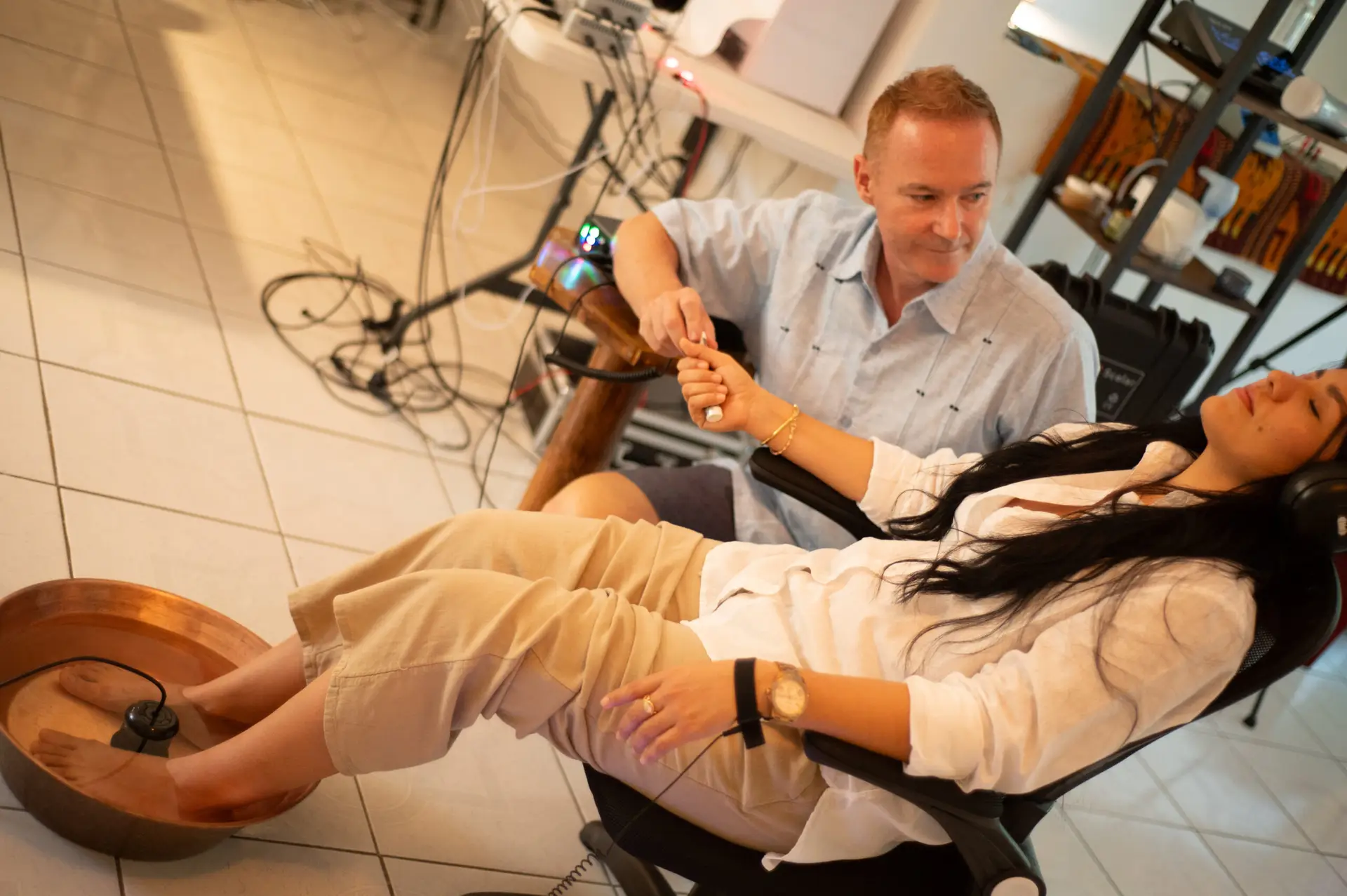
cBridge and PEAT: Coaching-Based Approaches for Deep Emotional Release
Have you ever done the “right” thing—talked about your past, understood the patterns, read the books—yet your body still reacts like it’s happening now?
That’s the moment many people describe to me: “I get it intellectually… but my nervous system didn’t get the memo.”
At Natoorales, we work with a simple reality: stress and trauma patterns don’t only live in thoughts. They live in the body’s timing, tension, breath, and protective reflexes. And that’s where approaches like cBridge and PEAT can become valuable—because they focus less on “explaining” and more on shifting how the pattern is held in the system.
This article reframes both methods in a coaching-compliant way: grounded, human, and practical—without overpromising.
Summary
In this guide, we’ll explore:
- What cBridge and PEAT are (in real-world language)
- Why “talking about it” can be helpful—but not always sufficient for body-based patterns
- How these approaches support regulation, integration, and resilience
- A safe way to decide whether either approach is right for you
- A practitioner insight on bioenergetics: why emotional bracing drains mitochondrial energy
[BANNER CTA: Ready for a deeper look? Book your Bio-Audit™ Wellness Evaluation here: https://natoorales.com/natoorales-services/wellness-evaluation/ ]
First: A Respectful Reframe (No Hype, No Guarantees)
Let’s start clean:
- These approaches are not magic.
- They are not a replacement for clinical care when that’s needed.
- They can be deeply supportive when used with the right pacing, safety, and practitioner skill.
What I can say honestly is this:
When the nervous system feels safe enough to update an old protective pattern, people often experience surprising relief—sometimes fast, sometimes gradually.
What Is cBridge?
In the Natoorales world, cBridge is best understood as a structured, body-aware release method that uses:
- attention + imagery
- breath + pacing
- gentle body points (often used along meridian maps)
- and feedback-based guidance (to stay inside a safe window)
Instead of pushing you to relive your story, cBridge tends to work with the “charge” underneath the story—the place where your system learned: “That was too much. I need to protect myself.”
What cBridge tends to support (client language)
- less emotional overreaction
- less internal “pressure”
- fewer looping thoughts
- improved calm after triggers
- more access to choice in the moment
If you want to explore this work in a structured way, our Trauma Release Services are designed as a coaching-based container that emphasizes safety, pacing, and integration.
What Is PEAT?
PEAT (Primordial Energy Activation and Transcendence) is often described as a polarity integration process.
Here’s the simple version:
Many inner struggles are powered by two opposing forces that keep pulling you apart, such as:
- freedom vs. belonging
- success vs. safety
- love vs. self-protection
- visibility vs. rejection
PEAT helps you gently locate the tension between opposites, then supports your system in finding a neutral, integrated place where the charge softens.
What PEAT tends to support (client language)
- feeling more “whole”
- less internal conflict
- less compulsive overthinking
- more emotional steadiness
- fewer identity-driven swings
This is one reason PEAT can feel “bigger than one event.” It often works at the level of pattern architecture rather than only memory content.
Why These Approaches Can Work When Talking Isn’t Enough
Talking can be valuable. Insight matters.
But here’s the lived experience many people report:
“I understand it… and my body still reacts.”
That’s not failure. That’s biology.
When your system learned a protective response, it often stored it as:
- breath pattern changes
- muscle bracing (jaw, throat, diaphragm, pelvic floor)
- vigilance and scanning
- freeze/collapse reflexes
- emotional shutdown or hyper-reactivity
Approaches like cBridge and PEAT aim to support a different outcome:
“A nervous system update”
Not by forcing your story, but by changing your present-moment relationship to the pattern—inside a safe window.
If you’re also carrying long-running family patterns that feel “bigger than you,” you may want the broader lens of The Miasms Hub, which explores inherited stress themes and multi-generational burden patterns (without turning your life into a diagnosis).
How to Know If You’re a Good Fit
You may be a fit if…
- you feel stuck in a repeating emotional loop
- you’ve done plenty of mental work but still feel body-level activation
- you want something structured, paced, and integration-oriented
- you’re willing to track changes over time (not chase instant fireworks)
You may need a different first step if…
- you’re currently in an unstable crisis state
- you don’t have basic support pillars (sleep rhythm, nourishment, grounding)
- you’re pushing yourself to “fix everything now” (that urgency often backfires)
If your system is already running hot from overwork and depletion, consider starting with Executive Burnout Recovery or our foundational rhythm work in the Nervous System Reset. A regulated baseline makes deep work easier—and safer.
What a Session Can Feel Like (Real-World Expectations)
People often ask me, “Will it be intense?”
My honest answer: it depends on pacing, practitioner skill, and your system’s current capacity.
In well-held work, many people report:
- a sense of “space” inside the chest or belly
- warmth, yawning, breath release
- emotional waves that pass without becoming overwhelming
- clearer boundaries afterward
- better sleep that night or within the week
And sometimes the shift is subtle at first—until you notice the old trigger doesn’t hook you the same way.
That’s the real measurement: your life gets easier to live.
Practitioner Insight: Trauma Patterns, Mitochondria, and the Cost of Bracing
Here’s something I wish more people understood:
Chronic bracing is expensive.
When your system stays guarded—jaw tight, diaphragm held, shoulders elevated—your body burns more energy just to exist. That’s not metaphor. It’s bioenergetics.
In practice, I see this pattern constantly:
- the “tired but wired” client
- the person who can’t nap even when exhausted
- the person who’s calm in their head but tense in their body
- the person whose digestion shuts down under stress
- the person who feels drained after social contact
When bracing becomes your default, mitochondria are asked to produce steady energy in a body that keeps signaling “threat.” That often leads to:
- inconsistent sleep depth
- unstable appetite and cravings
- recovery that feels slow
- mood that swings with stress load
This is one reason cBridge and PEAT can be so supportive: they’re not just “processing emotion.” They’re helping the system stop spending ATP on defense.
And here’s the coaching-level marker I watch for:
When the jaw softens and the breath drops lower, energy often returns—even before anything dramatic happens.
That’s why the deeper container inside the NeuroSoul Program integrates somatic work with bioenergetic support: it’s not “mind vs. body.” It’s a whole-system recalibration.
What About Supplements and Nervous System Support?
Supplements can support resilience—but they’re not the work.
In coaching, I see them best used as “rails” that help the system stay regulated while deeper patterns unwind.
Common support categories to discuss with a qualified professional (especially if you’re sensitive or on medications):
- mineral support (magnesium forms, trace minerals)
- omega-3 support
- gentle adaptogens (as appropriate for your constitution)
- amino-acid based calming supports (tolerance varies widely)
- sleep rhythm supports (light timing, evening wind-down, nervous system cues)
The order matters: state first, stack second.
If you want this personalized, start with the Wellness Evaluation / Bio-Audit so we can map your terrain and avoid guesswork.
The Authority Bridge (Outbound Links)
To build trust and keep this grounded in real science, here are two strong topics to link via PubMed/NIH:
Getting Started: A Safe First Step
If you’re curious about cBridge or PEAT, here’s a grounded way to begin:
Step 1: Build a baseline (7 days)
- morning outdoor light
- protein + hydration early
- 10-minute walk after your main meal
- 5 minutes of downshift breathing daily
Step 2: Track 3 markers (0–10)
- sleep depth
- emotional reactivity
- daytime energy stability
Step 3: Choose the right container
- If you want targeted release work: start with Trauma Release Services
- If your main driver is depletion and overwhelm: consider Executive Burnout Recovery
- If you want the full system approach: explore the NeuroSoul Program
To book or ask questions, use the Natoorales contact page.
Conclusion
If you’ve felt frustrated because insight hasn’t translated into relief, you’re not broken. You may simply be working with a pattern that lives deeper than thought.
cBridge and PEAT offer coaching-based approaches that can support:
- regulation
- integration
- emotional release
- and a calmer internal baseline
When the nervous system stops bracing, life gets more spacious. And that’s the real goal: more choice, more presence, more you.
Coaching Disclaimer: This article is for educational purposes only and is not medical advice. It does not diagnose, treat, or prevent any condition. Please work with qualified professionals for personal support.
Related Reading
SEO DATA SET
- New Title: cBridge and PEAT for Emotional Release Support | Natoorales
- New Slug: cbridge-peat-emotional-release-support
- Meta Description: Explore cBridge and PEAT as coaching-based approaches for emotional release, nervous system stability, and bioenergetic resilience—grounded and practical.
- Primary Keyword: cbridge and peat support
Work with Natoorales
A clean entry point, clear boundaries, and calm execution—coaching + education (non-medical).
- Bio-Audit™ $249
- NeuroSoul™ Intensive $9,400 (12 weeks)
- Executive Burnout Recovery $3,800
- Systemic Constellations $999
Coaching + education only. Not medical advice. Not diagnosis/treatment/prescription.
If severe/urgent symptoms, seek licensed care.
Bioenergetic assessments are for educational and stress-management purposes only… not physical tissues or medical pathologies…